
Understanding Base Costs for Roof and Gutter Projects
When planning a roof and gutter replacement, the first step is understanding the baseline costs that form the foundation of any estimate. Material selection drives the largest portion of your investment. For roofing, asphalt shingles remain the most budget-friendly option, typically ranging from $90 to $150 per square (100 square feet) for materials alone. Mid-tier architectural shingles offer enhanced durability and aesthetic appeal at $120 to $200 per square, while premium designer shingles can reach $250 to $400 per square.
Metal roofing represents a higher upfront investment but delivers exceptional longevity. Standing seam metal panels run between $400 and $700 per square for materials, while metal shingle profiles fall into the $300 to $500 range. The material choice directly impacts your project timeline and labor requirements. Asphalt installations move quickly, often completing in one to three days for average homes, while metal systems demand more precision and typically require three to five days.
Labor costs in the Jasper area reflect both the skill level required and the complexity of your roof structure. Straightforward gable roofs with moderate pitch allow crews to work efficiently, keeping labor in the $60 to $90 per square range for asphalt installations. Complex rooflines featuring multiple valleys, dormers, or steep pitches increase labor to $100 to $150 per square due to safety equipment needs and slower work pace. Metal roof installation commands higher labor rates, typically $150 to $250 per square, reflecting the specialized training and attention to detail these systems require.
Gutter systems add another layer to your budget. Seamless aluminum gutters, formed on-site to eliminate leak-prone seams, cost $6 to $12 per linear foot installed. This price includes standard downspouts and basic hangers. Copper gutters deliver unmatched beauty and corrosion resistance but carry a premium price of $25 to $40 per linear foot. Steel gutters occupy the middle ground at $10 to $18 per linear foot, offering strength for homes in areas with heavy snow loads or frequent storms.
Most homes require 150 to 200 linear feet of gutter, meaning a complete seamless aluminum system typically costs $900 to $2,400 installed. Factor in gutter guards if you want to minimize maintenance. Basic screen guards add $3 to $5 per linear foot, while premium micro-mesh systems run $8 to $15 per linear foot. For homeowners seeking long-term value, professional installation ensures proper slope for drainage and secure mounting that withstands Indiana weather patterns.
Regional and Local Factors Affecting Your Investment
Jasper and the surrounding Dubois County area present unique conditions that influence both material selection and installation costs. The region experiences true four-season weather, with winter temperatures regularly dropping below freezing and summer heat testing roof ventilation systems. This climate variability means your roof must handle ice dam formation in January and withstand 90-degree heat in July, driving many homeowners toward materials proven to perform across temperature extremes.
Local building codes in Jasper require permits for roof replacement projects, adding $150 to $400 to your total cost depending on home size and project scope. The permit process ensures installations meet wind resistance standards and proper ventilation requirements, protecting your investment and maintaining your home’s insurability. Most roofing installation teams handle permit acquisition as part of their service, saving you trips to the municipal building and ensuring all documentation meets current code.
Material availability in southern Indiana affects pricing and project scheduling. While asphalt shingles arrive readily from regional distributors, specialty materials like standing seam metal panels or architectural copper may require longer lead times. Spring and early fall represent peak seasons for roof replacement in Jasper, as homeowners race to complete projects before winter or capitalize on mild weather. This seasonal demand can extend scheduling by two to four weeks during April through June and September through October.
Labor market conditions in smaller communities differ from major metropolitan areas. Jasper benefits from experienced crews who understand local building practices and weather patterns, but the contractor pool is more limited than in larger cities. This creates moderate pricing stability, with less dramatic seasonal price swings than you might see in Indianapolis or Louisville. However, securing your preferred installation window often requires booking four to six weeks in advance during busy periods.
Disposal costs for old roofing materials factor into regional pricing. Most Jasper-area contractors include one layer of shingle removal in their base estimates, with fees ranging from $50 to $80 per square for tear-off and haul-away. Homes with multiple existing layers require additional removal work, adding $30 to $50 per square per layer. The local landfill accepts construction debris, but tipping fees have increased in recent years, modestly impacting overall project costs.
Gutter System Choices and Their Cost Implications
Vinyl fencing has gained substantial market share among property owners seeking low-maintenance boundary solutions without compromising visual appeal. Manufactured from polyvinyl chloride compounds engineered for exterior exposure, modern vinyl fencing resists the deterioration patterns that affect wood materials. The material does not require painting, staining, or sealing, eliminating the recurring maintenance obligations that consume time and resources over a fence’s lifespan. Occasional washing with soap and water maintains appearance, making vinyl particularly attractive for busy households or investment properties.
Durability represents a primary advantage of vinyl construction, with quality installations lasting thirty years or longer without significant degradation. The material withstands Jasper’s temperature fluctuations without warping, cracking, or splitting when properly manufactured and installed. Unlike wood, vinyl remains unaffected by insect activity and does not rot when exposed to moisture. Color remains stable throughout the material rather than applied as a surface coating, meaning scratches and minor damage remain less visible than on painted surfaces. White and tan represent the most common color selections, though manufacturers now offer expanded color ranges including gray and beige variations.
Initial investment for vinyl fence installation typically exceeds wood fencing costs but remains competitive when evaluated against total ownership expenses over decades. The elimination of maintenance costs and extended lifespan often result in lower total expenditure compared to wood alternatives requiring regular refinishing and earlier replacement. Vinyl performs exceptionally well in full sun exposure without fading concerns that affected earlier generation products. Installation requires specialized techniques and equipment different from wood construction, making professional installation advisable to ensure proper panel alignment, post setting, and gate operation that withstands daily use throughout changing seasons.
Aluminum Fencing Strength and Aesthetic Versatility
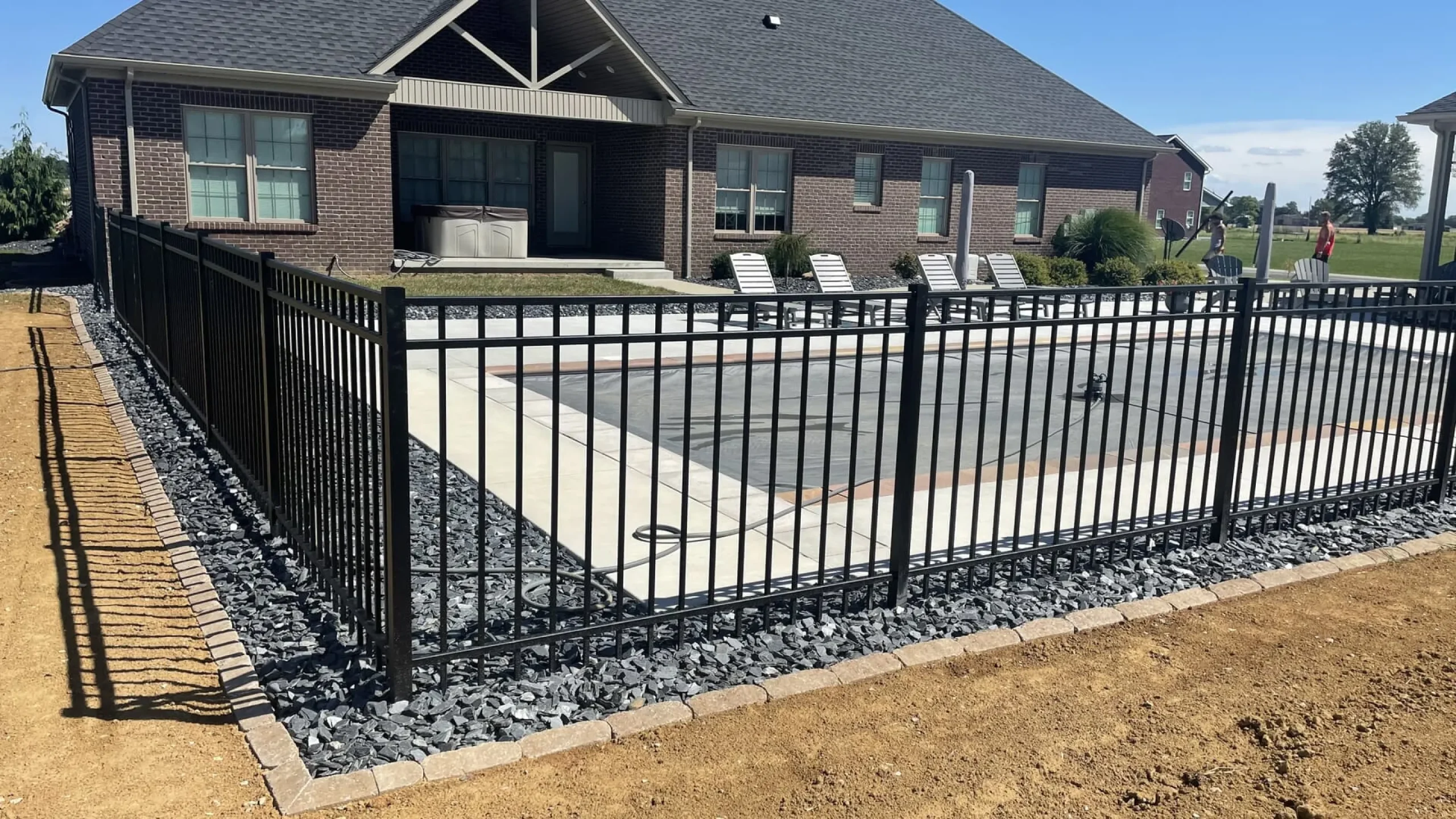
Aluminum fencing delivers an optimal balance of strength, aesthetic refinement, and minimal maintenance requirements that appeal to homeowners prioritizing durability and visual elegance. The material naturally resists rust and corrosion, making it suitable for properties with irrigation systems, pool areas, or locations with high moisture exposure. Powder-coated finishes provide color stability and additional protection while offering style flexibility beyond basic metal appearance. Black, bronze, and white represent popular finish selections that complement various architectural styles common throughout Jasper residential areas.
The open design characteristic of most aluminum fencing provides security and boundary definition without creating visual barriers that diminish property sight lines. This transparency proves particularly valuable for properties with attractive landscaping, water features, or scenic views worth preserving. Aluminum construction allows for significant height variations and decorative elements including finials, rings, and scrollwork that replicate traditional wrought iron aesthetics at reduced weight and cost. The material performs consistently across temperature ranges without expansion or contraction issues that affect some alternatives.
Installation costs for aluminum fence installation position the material in the moderate to upper price range depending on style complexity and height specifications. The fencing installs efficiently on properties with grade variations or uneven terrain through rack-able panels that adjust to slope without custom cutting. Aluminum provides excellent longevity with minimal maintenance beyond occasional washing, typically lasting thirty years or more without structural degradation. While aluminum does not provide the privacy level of solid board fencing, it excels in applications requiring secure boundaries with maintained visibility such as pool enclosures, front yards, or properties where local regulations restrict solid fence construction. The material’s light weight relative to its strength simplifies installation while providing sufficient durability to withstand typical impacts and weather exposure throughout southern Indiana’s varied seasonal conditions.
Additional Factors and Hidden Costs to Anticipate
Several cost factors emerge only after project initiation, making contingency budgeting wise. Deck repair represents the most common unexpected expense. Roofs nearing the end of their service life often hide water damage beneath the surface. Contractors typically discover compromised decking during tear-off, requiring plywood or OSB replacement at $45 to $75 per sheet installed. A roof requiring five to eight sheets of deck repair adds $225 to $600 to your total. Roof inspection services can identify potential deck issues before starting work, allowing accurate budgeting from the start.
Fascia and soffit boards deteriorate from years of moisture exposure, particularly on older homes with inadequate ventilation or clogged gutters. Replacing damaged fascia boards costs $8 to $15 per linear foot for materials and labor, while soffit work runs $6 to $12 per linear foot. A home requiring 80 feet of fascia replacement adds $640 to $1,200. Addressing these components during roof replacement makes practical sense since scaffolding and labor are already on-site, avoiding duplicate mobilization costs for future repair.
Chimney flashing and cricket installation protect vulnerable roof penetrations. Standard chimney reflashing costs $300 to $600 depending on size and complexity, while building a proper cricket (a small peaked structure that diverts water around the chimney) adds $400 to $800. Homes with multiple chimneys, plumbing vents, or roof-mounted equipment require individual flashing for each penetration, typically $75 to $200 per vent. These waterproofing details determine whether your roof lasts its full expected lifespan or experiences premature failure.
Seasonal timing affects both availability and pricing, though less dramatically in Jasper than in some markets. Late fall and winter installations often come with 5 to 10 percent discounts as contractors seek to keep crews working during slower periods. However, cold-weather installation presents challenges for asphalt shingles, which require warm temperatures for proper sealing. Metal roofs install successfully year-round, making them attractive for winter projects. Spring and summer command premium scheduling but offer ideal installation conditions and faster completion.
Emergency situations after storm damage create unique pricing dynamics. Insurance-covered repairs typically proceed at standard rates, with homeowners paying only their deductible. However, severe widespread storms that damage hundreds of roofs simultaneously can strain local contractor capacity, sometimes resulting in 10 to 20 percent price increases due to demand surge. Homeowners with aging roofs approaching replacement should consider proactive scheduling rather than waiting for a weather event that forces premium-priced emergency work. Taking time to gather multiple estimates, verify references, and schedule during shoulder seasons often saves 15 to 25 percent compared to reactive emergency replacement.